How to Childproof Your Door Locks
For families living in busy urban neighborhoods, keeping children safe inside the home is a daily priority and it is important to know how to childproof your door locks. Parents often think about cabinet locks, outlet covers, and baby gates, but one area that is frequently overlooked is the security of door locks. A curious toddler can wander farther than many parents realize, and in a crowded city environment filled with traffic, stairwells, elevators, and strangers, an unsecured door can quickly become a dangerous situation.
Young children are naturally curious. They learn by touching, climbing, turning, and exploring. It only takes a few seconds for a child to unlock a door and step into a hallway, apartment lobby, or even out onto a busy street. That is why childproofing your door locks is one of the most important safety upgrades any homeowner or apartment resident can make.
The good news is that childproofing your doors does not require turning your home into a fortress. With the right combination of locks, hardware, habits, and awareness, families can dramatically improve safety while still maintaining convenience and emergency accessibility.
One of the first things homeowners should understand is that children are extremely observant. If they see adults unlocking a deadbolt or opening a lever handle enough times, they often begin trying to imitate those actions. Many standard locks are surprisingly easy for children to operate. Lever-style handles are especially problematic because a child can simply lean their weight onto the handle and open the door. Even some basic thumb-turn deadbolts can be manipulated by toddlers with enough persistence.
For homes with young children, the first line of defense should be installing high-mounted security devices. Door chain locks, swing bar locks, or secondary deadbolts placed higher on the door can help prevent children from reaching them. These locks work well because they add another layer of security above the child’s line of sight and reach. In apartments and urban homes where space may be limited, these compact locking solutions are especially effective.
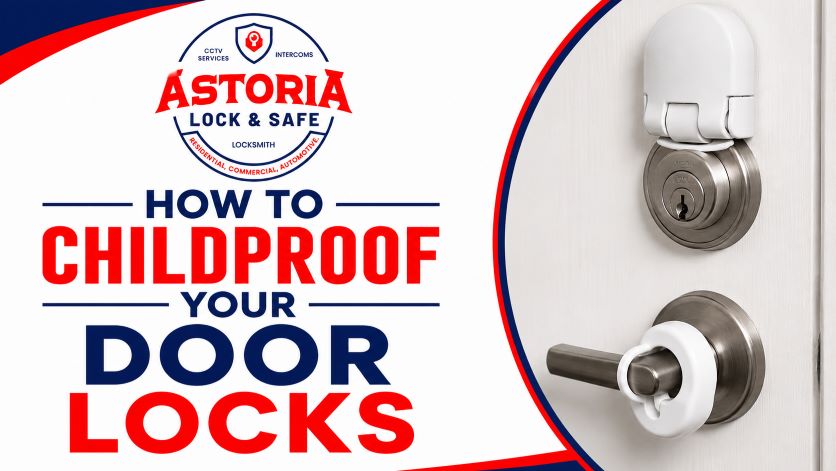
Another highly effective option is the use of door knob covers or lever handle childproof devices. These products are designed to prevent children from gripping and turning the handle properly. While adults can easily operate them, small children usually cannot figure out the mechanism. These devices are inexpensive, easy to install, and ideal for interior doors as well as some exterior entryways.
For homeowners with sliding doors leading to balconies, patios, or terraces, additional precautions are essential. Sliding doors can be especially dangerous in apartment buildings or high-rise environments. Installing a sliding door security bar or top-mounted child lock can prevent children from opening the door without supervision. Balcony access should never rely solely on the standard factory latch that comes with the door.
Urban families also need to think carefully about apartment entry doors that open directly into hallways or stairwells. In many city buildings, once a child exits the apartment, they can quickly become disoriented or difficult to locate. For this reason, many parents choose to install double-cylinder deadbolts or security devices positioned well above a child’s reach. However, homeowners must also ensure that any security upgrade still allows quick emergency exit in case of fire or evacuation. Safety should always balance child protection with emergency accessibility.
Modern smart locks can also play an important role in childproofing a home. Many newer smart lock systems allow parents to receive notifications whenever a door is opened. Some models can even automatically relock after the door closes. Others allow homeowners to disable interior thumb-turn functions during certain hours or activate child safety settings. In urban households where parents may be multitasking or working remotely, these features provide an extra layer of awareness and peace of mind.
Another overlooked aspect of childproofing is reinforcing good door-closing habits among adults in the household. Even the best lock cannot protect a child if a door is accidentally left unlocked or slightly open. In busy homes, especially during mornings or evenings when family members are coming and going, it becomes easy to overlook door security. Parents should make it a routine to check locks regularly, especially before bedtime or during high-activity times of the day.
Families should also evaluate all secondary entry points into the home. Many children do not leave through the main front door. Side doors, garage entrances, terrace doors, basement doors, and rear exits can all become hazards if not properly secured. In urban neighborhoods where homes may have multiple access points or shared entrances, every door should be included in the childproofing plan.
Windows near doors also deserve careful attention. Some children learn to unlock doors by climbing onto nearby furniture or using windowsills for leverage. Furniture positioned near entry doors can unintentionally help children access locks that would otherwise be out of reach. Moving chairs, benches, or decorative tables away from doors can eliminate this risk.
Parents should also avoid leaving keys in easily accessible locations. Children often imitate adults and may attempt to use keys if they find them hanging near the door or placed on low tables. Keys should always be stored in a secure area out of a child’s reach. At the same time, emergency exit keys should remain accessible to responsible adults in case of fire or emergency.
For homes with older locks, it may be worth considering a complete lock upgrade. Older lock systems may have loose hardware, worn mechanisms, or outdated designs that do not provide the level of security modern families need. A properly installed deadbolt with reinforced strike plates not only improves child safety but also enhances overall home security against break-ins. Many homeowners in Astoria Queens NYC turn to an experienced Astoria Locksmith like Astoria Lock and Safe when evaluating older locks and deciding which modern locking systems are best suited for families with children.
Many homeowners underestimate how quickly children develop problem-solving abilities. A lock setup that worked six months ago may suddenly become ineffective as a child grows taller and more coordinated. Childproofing should therefore be viewed as an ongoing process rather than a one-time installation. Families should periodically reassess their locks and security setup as children grow and begin exploring more independently.
In urban communities, another important concern is shared living spaces. Apartment buildings often have common hallways, elevators, staircases, laundry rooms, and rooftop access areas. If a child exits the apartment unnoticed, the environment outside the door can become hazardous very quickly. This makes apartment door security even more important than in many suburban environments. As a professional Locksmith in Astoria we can often identify hidden vulnerabilities in apartment doors that homeowners may not immediately notice themselves.
Parents should also teach children basic door safety as they grow older. While physical childproofing devices are important, education matters as well. Children should learn that exterior doors are not toys and should never be opened without permission from an adult. Consistent instruction combined with secure hardware creates the strongest overall protection.
One of the most common mistakes homeowners make is relying on a single lock for protection. True childproofing involves layered security. A deadbolt, secondary latch, childproof handle cover, and smart monitoring system together provide much stronger protection than any single device alone. Layered security also reduces the chance of failure if one mechanism is accidentally left unlocked.
Professional installation can make a significant difference when it comes to childproofing door locks properly. Locks that are poorly aligned, loosely mounted, or incorrectly installed may fail when needed most. Reinforced strike plates, properly secured hinges, and high-quality hardware all contribute to a safer environment for children. In situations where a lock suddenly malfunctions or a family becomes locked out with a child inside, having access to an Emergency locksmith Astoria service can be extremely important.
Parents should also remember that babysitters, grandparents, relatives, and older siblings need to understand the childproofing system in the home. Everyone caring for the child should know how the locks work, which doors require extra attention, and how to safely exit during emergencies. Consistency among caregivers is extremely important.
Urban life can also bring unexpected lock emergencies late at night or during weekends when children are asleep and families are most vulnerable. Whether dealing with broken locks, jammed deadbolts, or accidental lockouts, many homeowners appreciate the availability of a reliable 24 hour locksmith Astoria provider like Astoria Lock and Safe who can respond quickly when urgent situations arise.
Ultimately, childproofing your door locks is about creating peace of mind. In a fast-paced urban environment, distractions are everywhere, and accidents can happen in seconds. A properly secured home helps ensure that children remain safe while still allowing families to live comfortably and confidently.
The best childproofing strategies combine strong locks, smart planning, household awareness, door knob covers and regular maintenance. Whether living in a city apartment, townhouse, or single-family home, taking the time to secure your doors properly is one of the most valuable investments you can make in your child’s safety. Here is a link
A secure door does more than keep intruders out. For parents of young children, it helps keep the most precious members of the household safely inside where they belong. If you are in the Queens NY area and need a Locksmith in Queens, then contact Astoria Lock and Safe, a licensed, insured, professional locksmith service. Top of Form